
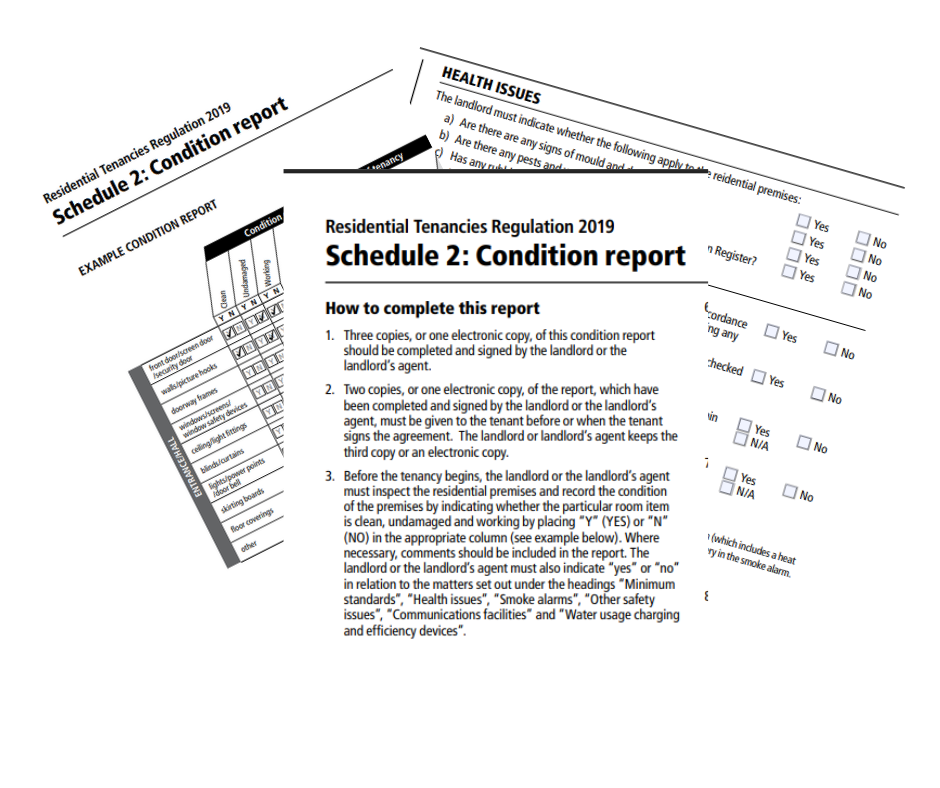
For many property managers, condition reports sometimes feel like just another administrative task. But in a recent NSW Tribunal case, we saw how crucial they become when a tenancy dispute ends up before a decision maker.
At the heart of the dispute was disagreement about the condition of the property. The Tribunal examined the ingoing condition report, the tenant’s comments and the available photographic evidence to determine what was present at the start of the tenancy and what might be tenant damage. This reinforces a fundamental principle: a condition report is the baseline for the life of a tenancy. If it’s thorough, clear and exchanged correctly, it protects everyone involved. If it’s not, it weakens the evidence you might later rely on.
In this case, the condition report was not provided to the tenant at the correct time, which led to the Tribunal finding the landlord in breach of their obligations. This wasn’t just a technicality. It affected how the evidence was weighed and made it harder to uphold bond claims. It’s a reminder that compliance around timing, signatures and document exchange is as important as the detail inside the report.
The case also highlighted how important photo labelling is. Simply uploading a stack of photos with generic filenames isn’t enough. The Tribunal noted that some photos were not clearly linked to specific rooms or items, and the bedrooms were described differently in different parts of the evidence. Because of this, a bond claim for floorboard damage was rejected — the images couldn’t be confidently matched to the claimed damage. Clear labelling that ties each photo to a specific location and feature makes your evidence far stronger.
It’s also worth emphasising something often stated in condition report templates: photographs and video recordings are not a substitute for accurate written descriptions of the condition of the premises. Photos should support the written entries, not replace them. A description such as -deep scratch on timber floor near lounge 1 sliding door, 120mm long- gives context that a photo alone cannot.
The case also touched on repairs. The tenant had reported a leaking shower during the tenancy, and the Tribunal found the landlord had not attended to it within a reasonable time. That meant a breach of the obligation to maintain the property in a reasonable state of repair. This shows that good record keeping isn’t just about the start of the tenancy — it’s also about how you document reported issues and your actions in response.
At the end of the day, a solid bond claim doesn’t come down to just one thing. It’s built on good evidence, clear records, acting at the right time, and dealing with repairs or damage when they first come up during the tenancy. If any one of those pieces is missing, your position starts to weaken. From getting the condition report right at the start, to addressing issues as they arise, and making sure claims are lodged on time at the end, it’s all part of the same process. When agents stay on top of each stage, they’re far less likely to lose out simply because something was left too long or not properly followed through.
View the full case here:
https://www.caselaw.nsw.gov.au/decision/19bd48cf5c2c9821c23fe2aa